



For a long time, it has felt as if we were sitting on an express train heading toward “the future.” Outside the window are flashing glass facades, flying cars and a fully connected society. Technology keeps advancing, efficiency keeps increasing, and the world seems to be accelerating along the same track. From the internet and mobile devices to artificial intelligence, every technological revolution has continued to reinforce one belief: The future will be faster, smarter and more automated than today.
But what if the future does not work that way?
What if the true force behind change is not one single trend moving forward, but the result of two seemingly opposing forces constantly colliding with one another?
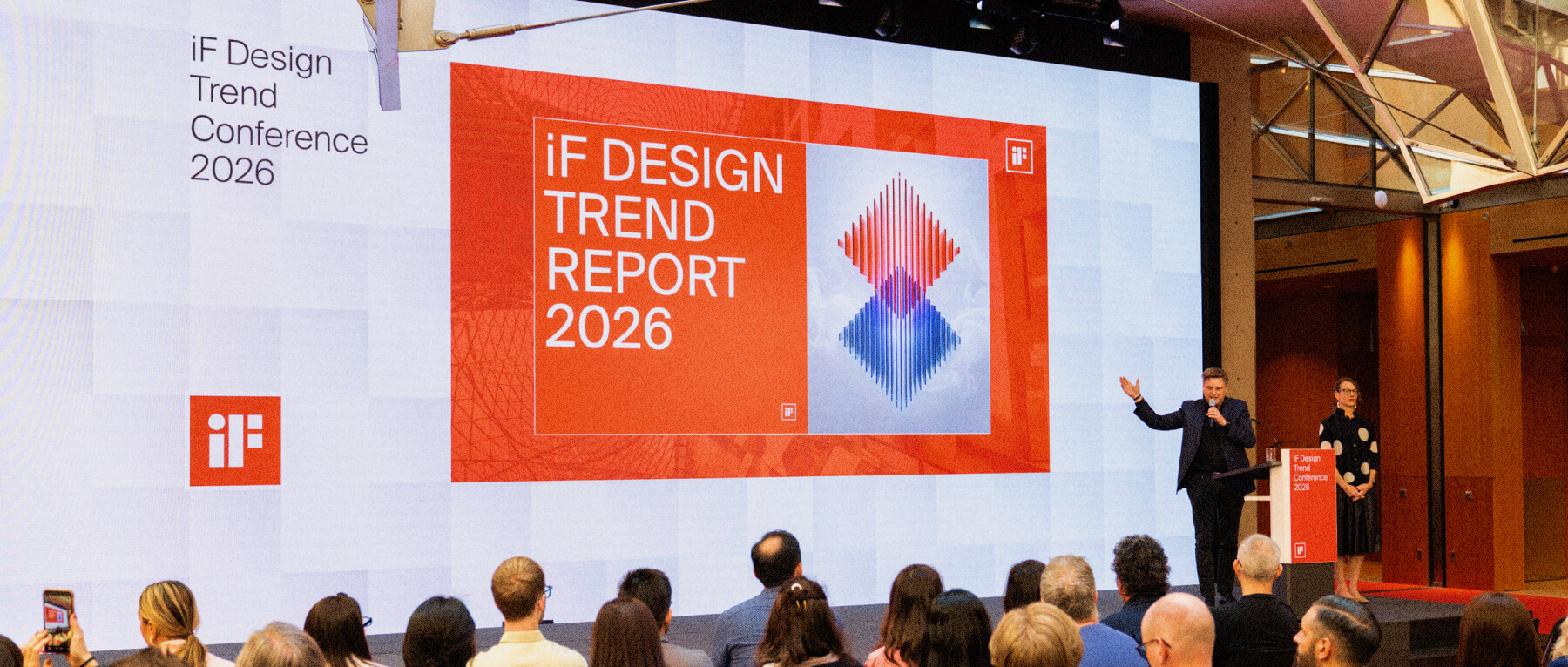
Recently, the international design institution iF Design put forward a highly thought-provoking perspective in its latest iF Design Trend Report 2026: the future is no longer defined by a single trend, but is born from the tension between trends and countertrends.
Founded in 1953, iF Design is an international design institution that has long observed changes across global design, technology and society. Through its annual iF Design Trend Report, it continues to track important shifts in the design field. Beyond the widely recognized iF Design Award, this annual trend report has also become an important reference for the global design industry in understanding the future.
In this report, iF points out that what truly drives social change is not a single trend itself, but the “Synthesis” generated through the ongoing friction between trends and countertrends.
For brands, this means that familiar growth logic is beginning to change. Technical barriers are being rapidly flattened, and AI is replicating styles, methods and creative ideas at an unprecedented speed. When more and more brands can access “good enough design,” the truly scarce capability begins to shift elsewhere.
As a creative team that has long focused on branding, digital experience and design trends, after reading and analyzing this report in depth, we will unpack the most important trend shifts for brands from three dimensions: brand design, web experience and content creation.
1. Introduction: The “Forced Reset” of Creativity
Artificial intelligence is entering the design industry at an unprecedented speed.
From brand visuals and content creation to website building and marketing communication, almost every stage of the process can now be supported by AI. In a sense, we are witnessing the democratization of design. Work that once required professional teams can now be quickly achieved by almost anyone through generative tools.
But this convenience also brings a new problem: the underlying logic of AI is not creation, but prediction.
It learns from existing data and assembles the answer most likely to be valid. Therefore, it naturally tends to replicate visual languages, narrative structures and aesthetic patterns that have already been proven effective.
iF calls this phenomenon the Age of Average.
When everyone is using the same data sources, the same tools and similar creative logic, the entire market gradually moves toward the average. More and more design starts to look correct, but very little of it is truly memorable.
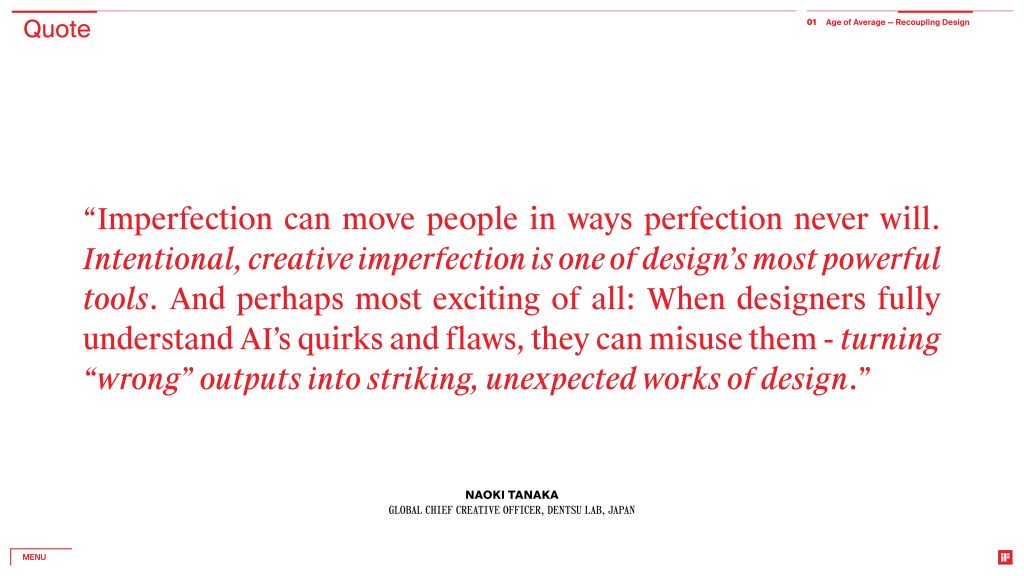
Naoki Tanaka, Global Chief Creative Officer at Dentsu Lab, describes this phenomenon as a “forced reset.”
AI averages out humanity’s vast accumulation of ideas and creative outputs, sending everyone back to the same starting line. When technology can easily produce standard answers, a new kind of competition begins: whoever can break free from the average will regain differentiation.
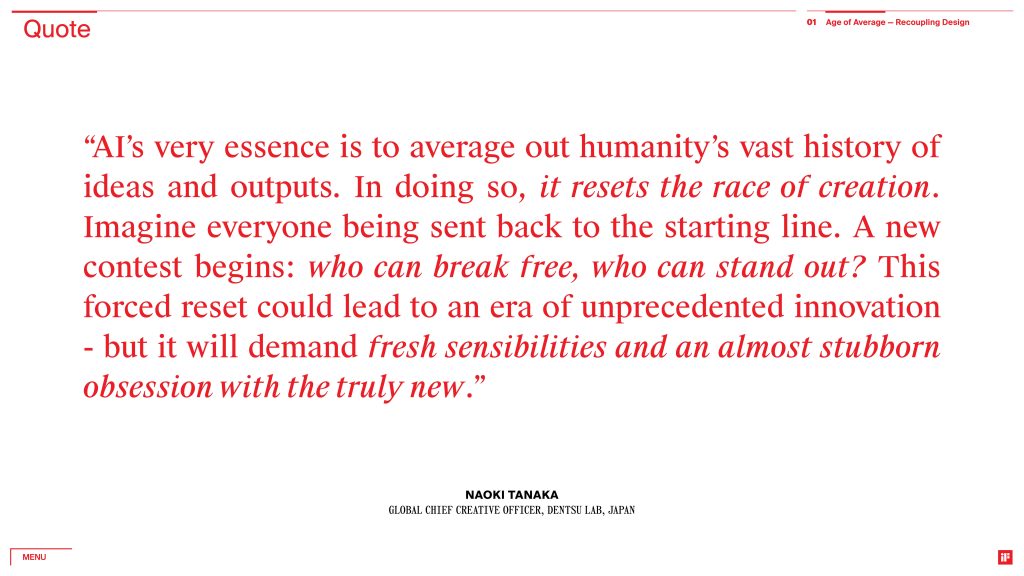
▲ Image source: iF Design Trend Report 2026
2. Brand Design: From “Aesthetic Compatibility” to “Attitudinal Deviation”
Over the past decade, brand design has gone through an obvious process of convergence.
To adapt to the communication logic of digital media and social platforms, more and more brands have adopted similar design strategies: minimalist layouts, unified type systems, soft gradients, premium-feeling photography and standardized brand language. Of course, this kind of design works. It helps users quickly understand a brand and makes content easier for algorithms to recognize and distribute.
However, when all brands begin to follow the same rules, design gradually loses its individuality.
The internet is essentially a massive system of replication. Popular visual styles are quickly imitated, successful communication models are repeatedly reproduced, and the emergence of AI further amplifies this capacity for replication. As a result, we now have more and more good design, but fewer and fewer memorable designs.
Behind this trend, iF further points to a deeper shift: brand “visibility” is becoming increasingly cheap.
In traditional communication systems, brands relied on indicators such as recall, awareness and exposure to measure communication effectiveness. But in today’s digital environment, these indicators are losing meaning. Algorithms can easily amplify content exposure, and generative systems can quickly produce large volumes of visual and informational material, making “being seen” no longer scarce in itself.
In response to this phenomenon, iF proposes a countertrend to the Age of Average: Recoupling Design.
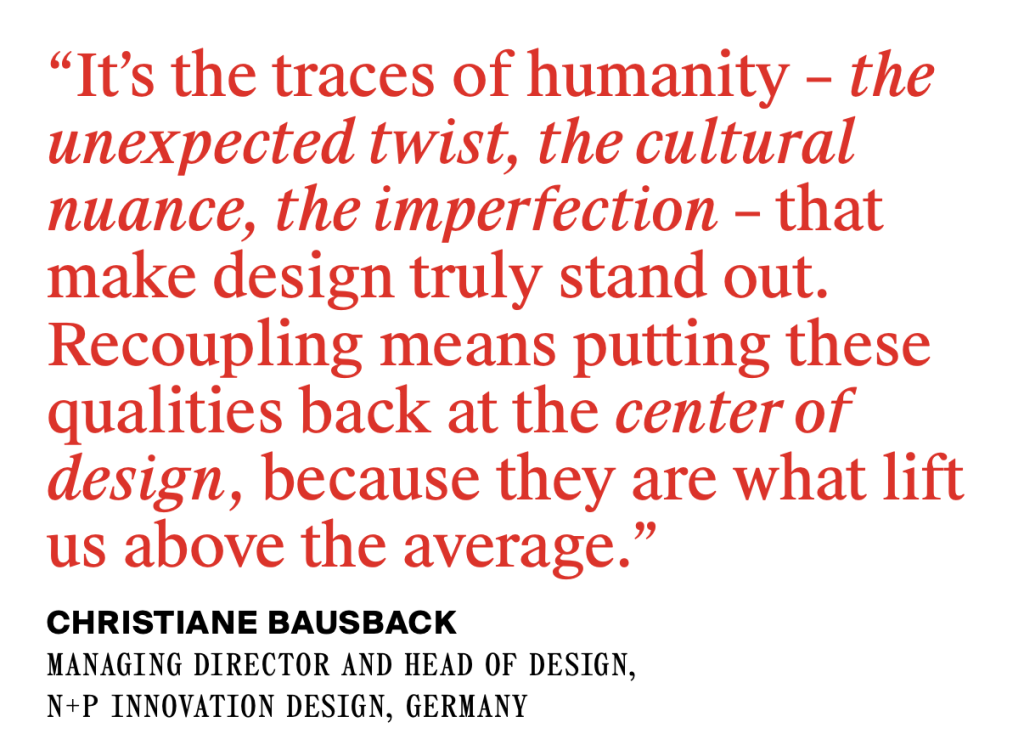
▲ Image source: iF Design Trend Report 2026
Recoupling does not mean simply returning to tradition, nor does it mean rejecting technology. Instead, in an algorithm-driven era, it means reconnecting with the real world. As algorithms become increasingly capable of predicting our preferences, making choices for us and even generating content on our behalf, people gain unprecedented convenience, but also gradually drift away from many real experiences without realizing it. Human connection to community is replaced by platforms, connection to culture is replaced by data labels, and connection to the real world is continuously diluted by screens and digital interfaces.
Therefore, Recoupling Design argues that design should return to real human experience. Through culture, community, traces of craft, local narratives and real interactions, brands can build deeper emotional resonance. Compared with standard answers that algorithms can quickly identify and distribute, Recoupling Design pays more attention to those elements that cannot be easily quantified, yet can create a sense of belonging and identity.
In other words, in an era increasingly driven toward average, Recoupling Design attempts to help brands recover the unique qualities that belong to human beings.
This trend has already begun to appear in more and more brand practices.
For example, the German football club FC St. Pauli launched its custom type family, FC Sans Pauli. Unlike traditional sports brands that pursue uniformity and neutrality, this typeface deliberately retains a rough, rebellious and community-driven character, allowing the type itself to become part of the club’s identity. What it communicates is not simply a visual style, but a clear value position.
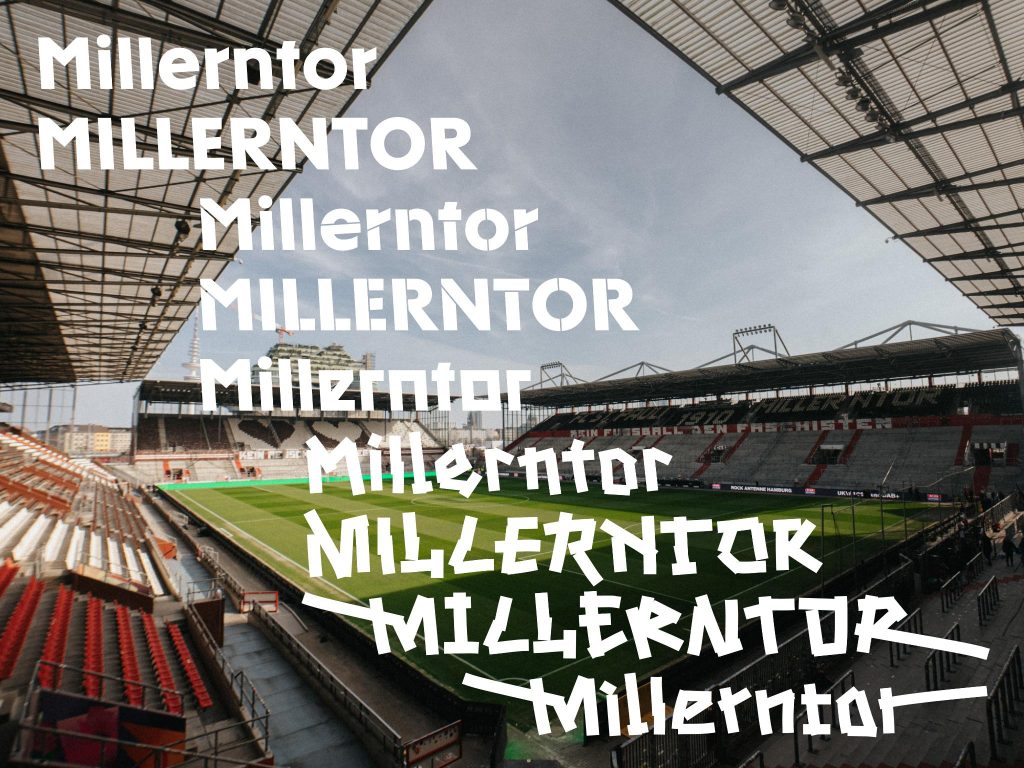
▲ Image source: iF Design Trend Report 2026
A similar logic can be seen in the eyewear design of SEEN. Instead of directly using visual symbols such as the rainbow flag, the brand uses a special frame structure that allows sunlight to naturally refract into a rainbow spectrum. Design no longer remains at the level of surface-level expression; it turns values into part of the product experience itself.
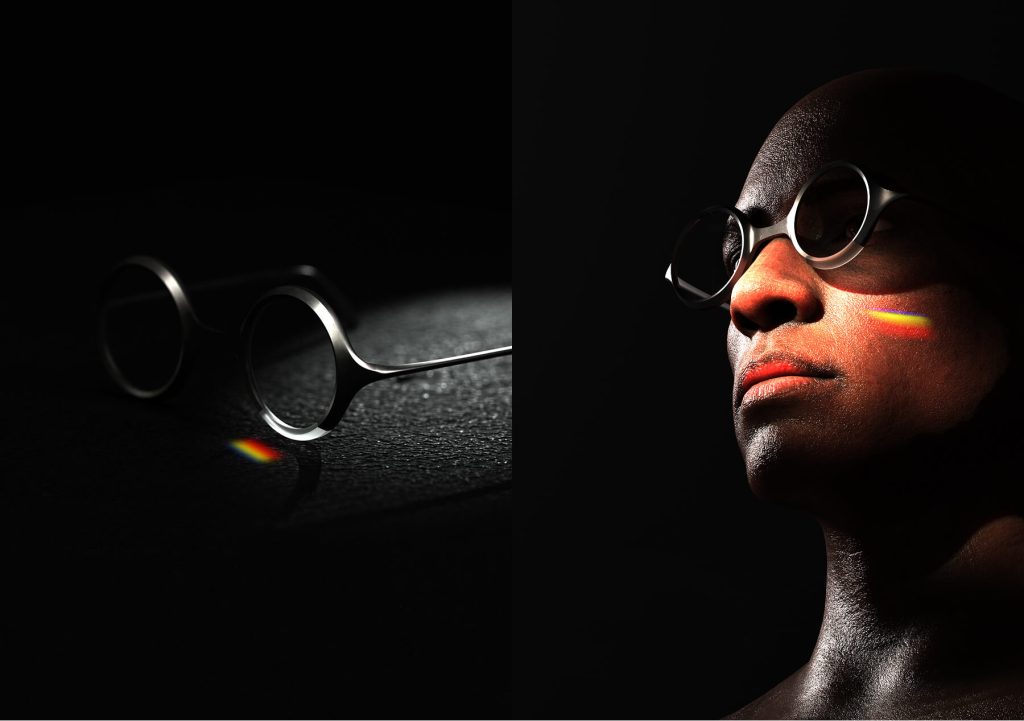
▲ SEEN eyewear design. Image source: iF Design official website
At the same time, some brands are beginning to embrace “imperfection” again.
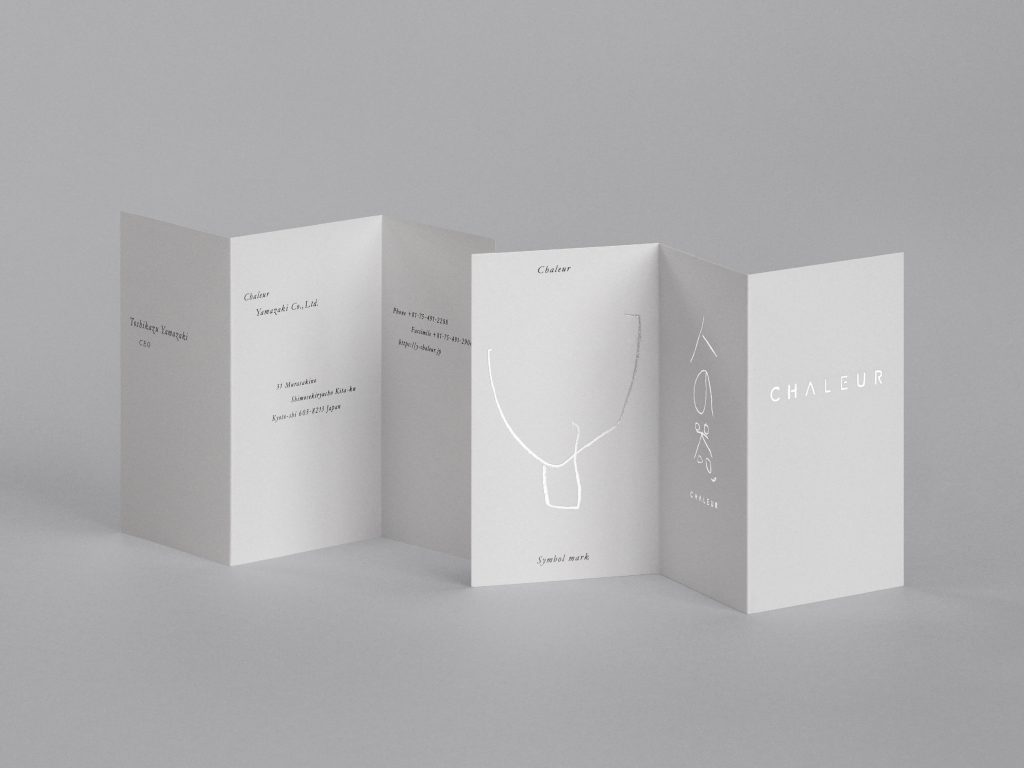
In its centennial identity project, CHALEUR directly incorporated a child’s drawing into its brand visual system. A stroke and drawing style that might originally have been considered not professional enough instead became the brand language with the most warmth and emotional resonance. Japanese eyewear brand Masahiro Maruyama has also long embraced the concept of “Unfinished Art,” deliberately retaining asymmetry and hand-drawn lines to challenge the industrial era’s obsession with perfection and order.

Microsoft’s Pride for Each Other project demonstrates another direction for the evolution of brand visual systems. The project did not use a single rainbow visual. Instead, it recombined and evolved different flags from the LGBTQIA+ community into a dynamic visual system capable of embracing diverse identities. Future brand assets may no longer need to be fixed and unchanging. They may instead become systems that can continuously grow and expand.
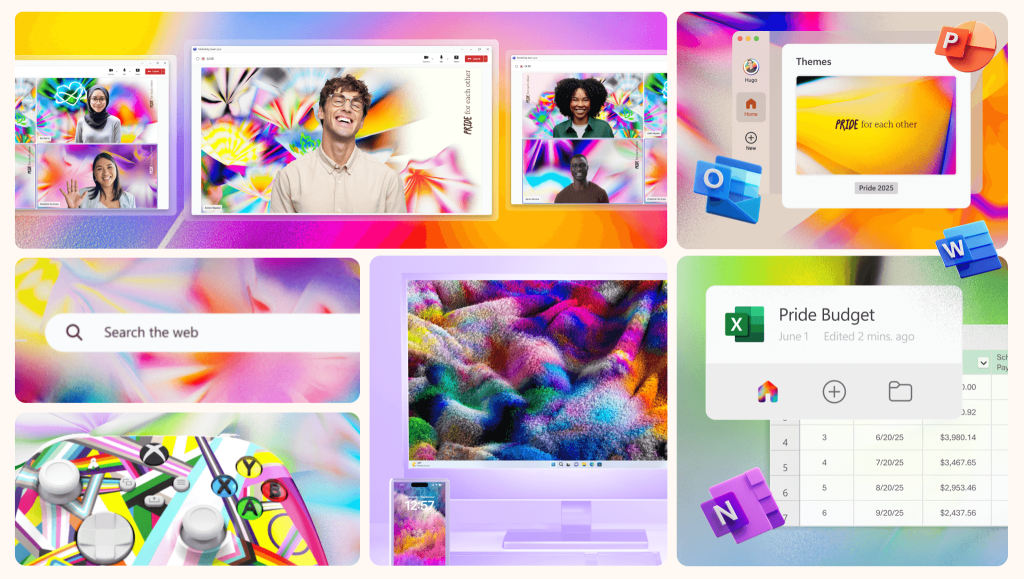
▲ Microsoft: Pride for Each Other campaign. Image source: iF Design official website
All of these cases point to the same trend: in the future, brand recognition will no longer come from being more standardized, but from being more real; no longer from being more correct, but from being more distinct.
📒 Insight: Embracing Imperfect Aesthetics — Zero Glam
In an age where AI can easily generate a “premium look,” premium aesthetics themselves are no longer scarce.
The more important question for future brands is not how to appear professional, but how to appear real. When more and more visual works share similar lighting, composition and textures, the expressions that can truly create emotional connection are often those that preserve human traces.
For brands, this means that the focus of design strategy is shifting from aesthetic optimization to cultural expression. Rather than chasing popular styles, it is more important to identify the brand’s own unique values, sense of community and expressive stance.
▲ Image source: iF Design Trend Report 2026
3. Web and Interaction Design: From “Seamlessness” to “Meaningful Friction”
If there has been one golden rule in internet design over the past two decades, it would be to make everything more convenient and seamless.
From search engines and mobile payment to recommendation algorithms and generative AI, digital products have continuously removed friction from the user experience. Whether in information access, content consumption or service experience, design has improved efficiency through “low-friction” approaches: reducing steps, hiding system complexity, lowering the need for user learning and even gradually moving toward no-touch interaction.
iF calls this trend Convenience Culture.
Convenience has greatly improved efficiency and shaped the success logic of the modern internet. This trend is especially visible in digital products. Information is cut into smaller fragments through snackification, complex processes are automatically completed by algorithms, and users increasingly do not need to understand the system itself — they only need to receive the result.
At the same time, however, a new problem begins to emerge.
When navigation systems replace our sense of direction, recommendation systems replace our ability to explore, and AI replaces parts of the thinking process, people receive answers faster and faster, but do not necessarily gain deeper experiences.
As a result, a new countertrend begins to emerge in design: Skillization.
This trend argues that design should not merely help users save effort, but should help users grow. Appropriate challenges, participation and learning processes can instead bring a deeper sense of satisfaction. In the iF Design Trend Report, this shift is further made concrete through an experience structure model: it no longer understands design as a single form of “efficiency optimization,” but as something composed of several interacting layers: the Hackability of Products, the Richness of Experience, and the Communities of Capability that emerge from them.
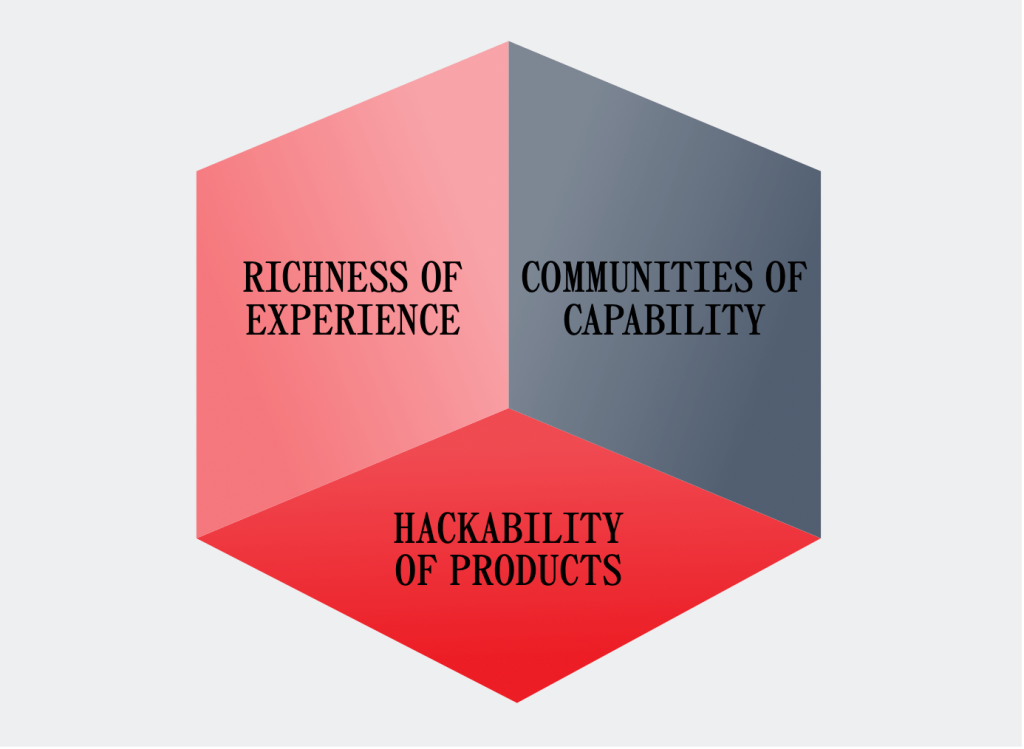
▲ Skillization experience structure model. Image source: iF Design Trend Report 2026
This means that a product no longer merely provides functions passively, but allows users to participate in it and even engage in a certain degree of self-extension and recreation. Experience is no longer only about being smooth or efficient; it needs layers, feedback and participation, so that users can gain a stronger sense of immersion and involvement throughout the process. And when people accumulate capabilities through sustained practice, new forms of community relationships also emerge — communities no longer based on content consumption, but on capability growth and shared experience.
In other words, the Skillization described by iF is not about making design more complicated. It is about transforming experience from a “consumption behavior” into a “capability-generating process.”
Within this logic, the design goals of websites and digital products also begin to change. “Convenience” no longer simply means completely eliminating friction from use. Instead, it requires a new balance between efficiency and participation. Design no longer only pursues the shortest possible path, but begins to ask: what degree of participation and resistance might actually help users understand a product more deeply and gain a sense of growth through use?
Samsung Aura demonstrates exactly this direction. It moves beyond traditional static brand guidelines, using AI to integrate emotion, data and design into a brand identity that continuously evolves. It responds to each user’s real context, making technology feel more human, more perceptive and more emotionally resonant, thereby redefining brand communication in the AI era.
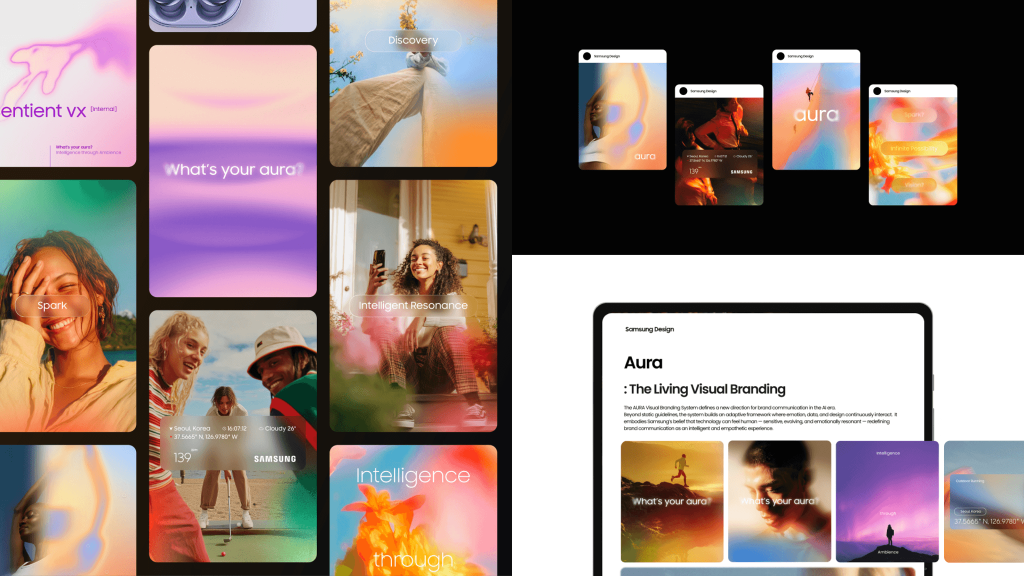
▲ The Living Visual Branding System for Samsung Aura. Image source: iF Design official website
SnapTrip redefines the interaction model of travel planning. Traditional travel booking experiences are often built on extensive searching, filtering and price comparison. Users have to constantly switch between different platforms, travel guides, booking sites and social content. It may appear to provide more choices, but in reality, it can easily lead to information overload. SnapTrip does not continue to reinforce the logic of “finding results faster.” Instead, it transforms travel planning into a natural conversation. Users no longer face an entire page of listings, but gradually clarify their destinations, preferences, budgets and emotional needs through interaction with an AI travel companion. The conversation itself may be “slower” than simple filtering, but it makes the planning process calmer, more personalized and more participatory.
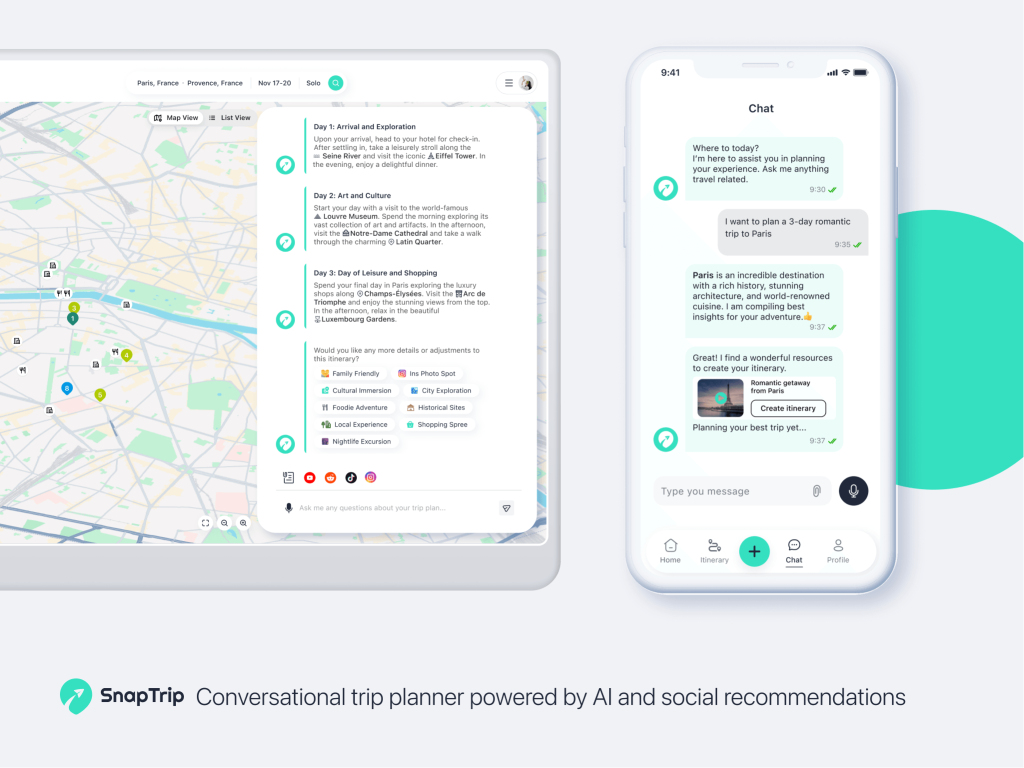
▲ SnapTrip AI-driven travel companion app & website design. Image source: iF Design official website
F.A.Z. Der Tag responds to another common problem in digital experience: information is continuously fragmented, and users are becoming more accustomed to quick browsing while finding it increasingly difficult to truly understand. As a mobile news app, it does not completely reject fragmented reading. Instead, while adapting to fragmented time, it reorganizes news into a more digestible structure through clear content hierarchies, a streamlined layout and AI summaries. It does not simply push an endless stream of content. Instead, it requires users to interact in order to access deeper summaries, balancing the immediacy of information access with a deeper understanding of trustworthy content, and helping users rebuild a healthier relationship with information.
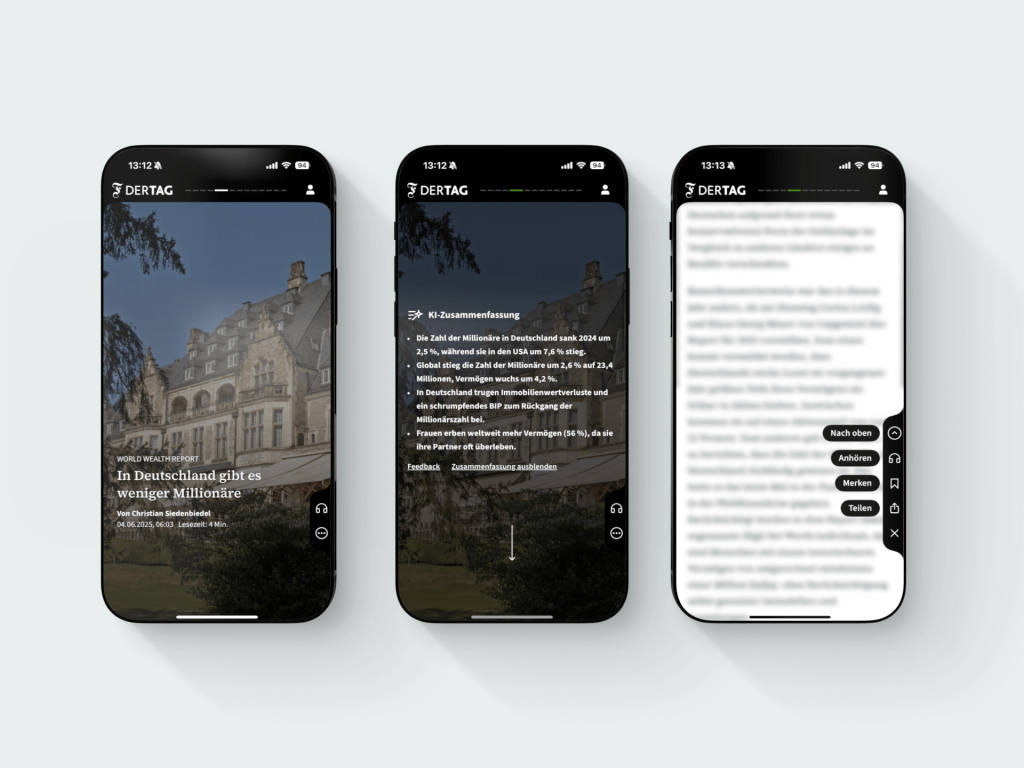
▲ F.A.Z. Der Tag: Mobile Zeitungs-App. Image source: iF Design official website
aspire focuses on the context of family investment education. It does not design investing as a financial operation that teenagers can quickly complete on their own with a few clicks. Instead, it creates a shared space for parents and children to participate together. On this platform, family members need to set goals together, discuss investment choices and understand the logic behind financial decisions throughout the process. This design actively adds a “required conversation” step. Although it may seem to increase the barrier to use, it fills the most important gap in financial education: understanding, discussion and shared decision-making. It turns a digital product from an execution tool into a space for learning and connection within the family.
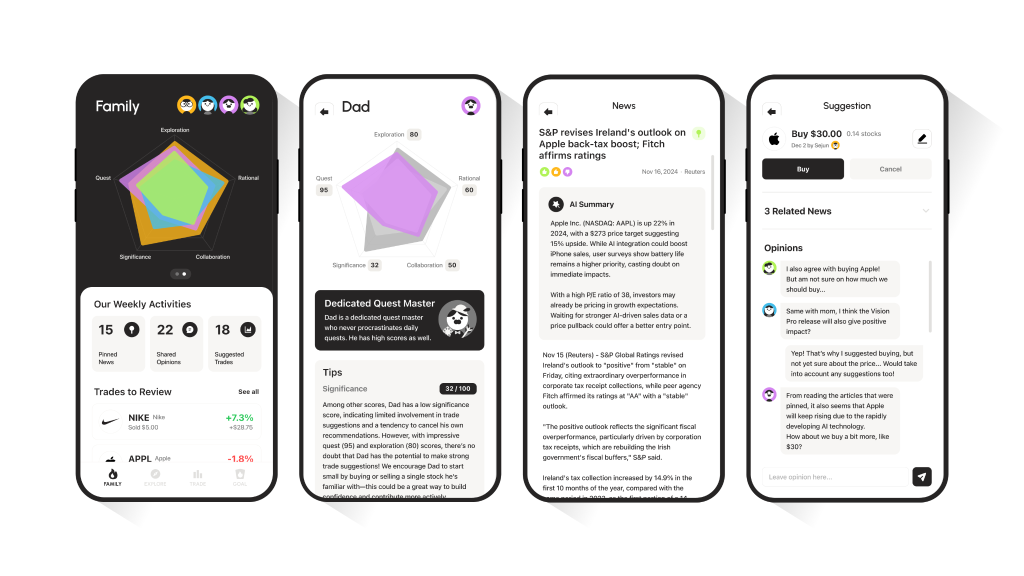
▲ aspire family investment service platform. Image source: iF Design official website
From this, we can see that future websites and digital products will increasingly be less centered around pages themselves, and more centered around the relationships between people and information, people and brands, and people and environments.
📒 Insight: From “Screen Thinking” to “Systems Thinking”
Future user experience design will no longer be only about optimizing buttons, pages and conversion paths. Truly valuable experiences often redesign user participation beyond efficiency: reducing information fatigue through conversation, guiding deeper understanding through structured content, and building capabilities and relationships through collaborative mechanisms. It is precisely through these forms of “meaningful friction” that digital products stop merely helping users complete tasks, and instead help users better understand, judge and grow.
The questions designers need to ask will become:
- How do users build a relationship with the brand?
- How do users gain a sense of growth through use?
- How can the product actively adjust its behavior based on environment and context?
When AI makes interfaces increasingly intelligent, the focus of design returns to the human being.
4. Content Production and Visuals: From “Perfect Simulation” to “AI Surrealism”
For a long time, brand content production has largely revolved around “authenticity” and “refinement.”
Whether in product photography, brand campaigns, CG rendering or post-production, the core goal of visual content has often been to make the image look realistic enough, premium enough and close enough to an ideal state. The lighting must be perfect, the scene must be believable, and the people and products must be presented without flaws.
But as generative AI, virtual production, ultra-HD LEDs, real-time rendering and new types of filming devices enter the content production process, the creative logic of brand visuals is changing. AI is not simply replacing photography. Instead, it is expanding the boundaries of “shooting” itself: some scenes no longer need to be physically built, some atmospheres can be amplified through digital visuals, and some shots can even be completed through non-traditional devices.
Because of this, the competitive focus of visual content is beginning to shift.
When “perfect images” become increasingly easy to manufacture, realism itself is no longer the scarcest thing. The question brands need to ask is no longer simply “Does this image look like reality?” but “Is this visual world memorable enough, and can it create an emotional experience that reality cannot provide?”
When everyone can manufacture realism, what can still create difference?
The answer iF gives is: imagination.
The most important feature of AI is not accuracy, but the fact that it naturally blurs the boundary between reality and fantasy. For AI, there is no essential difference between reality, mythology, dreams and fiction. As a result, more and more designers are beginning to treat AI’s “irrationality” as a new creative resource. In iF’s trend perspective, one important change brought by AI is that surrealism is re-entering everyday visual experience.
Inspire AURORA reflects this direction. Through ultra-HD LEDs and 3D media art, the project organizes aurora, light, shadow and sound into an immersive digital street. The focus is not to reproduce a natural landscape, but to transform a natural phenomenon into a surreal experience that can be entered and sensed. For visitors, visual content is no longer just a background screen; it becomes the memory of the space itself.
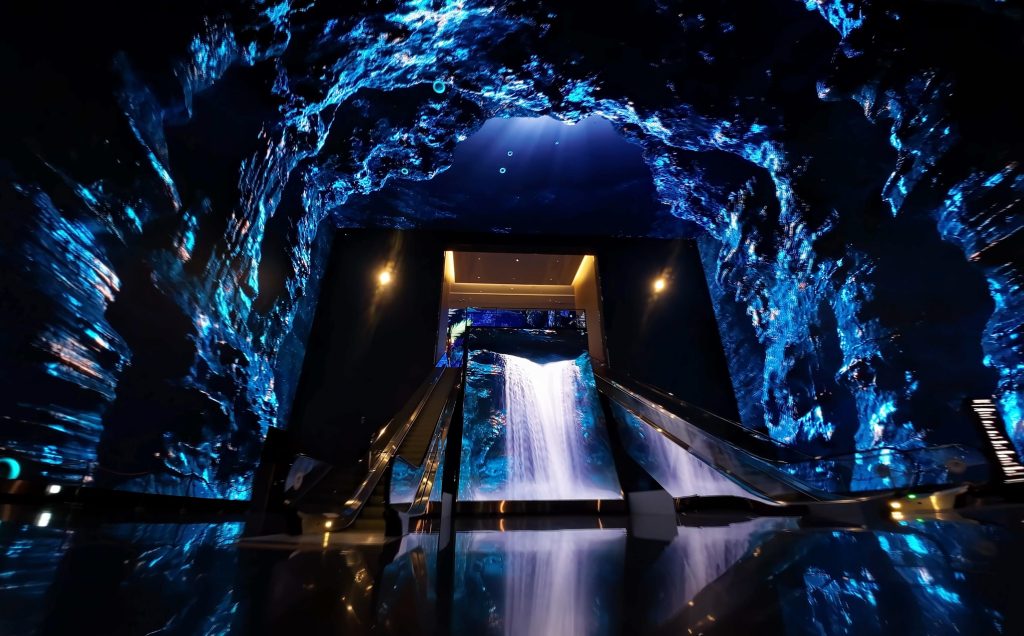
▲ Inspire AURORA Immersive digital entertainment street media. Image source: iF Design official website
The Saerodowon brand space demonstrates another way of producing brand content. Created for Saero zero-sugar soju, it builds an immersive space between reality and imagination. Inspired by a cultural sensibility around nature, leisure and refined enjoyment of drinking, it transforms the brand’s spirit of lightness, relaxation and refined drinking culture into an experiential dreamscape. The value of this case does not lie in using digital technology to manufacture spectacle, but in extending brand spirit from flat visuals into space, emotion and experience.
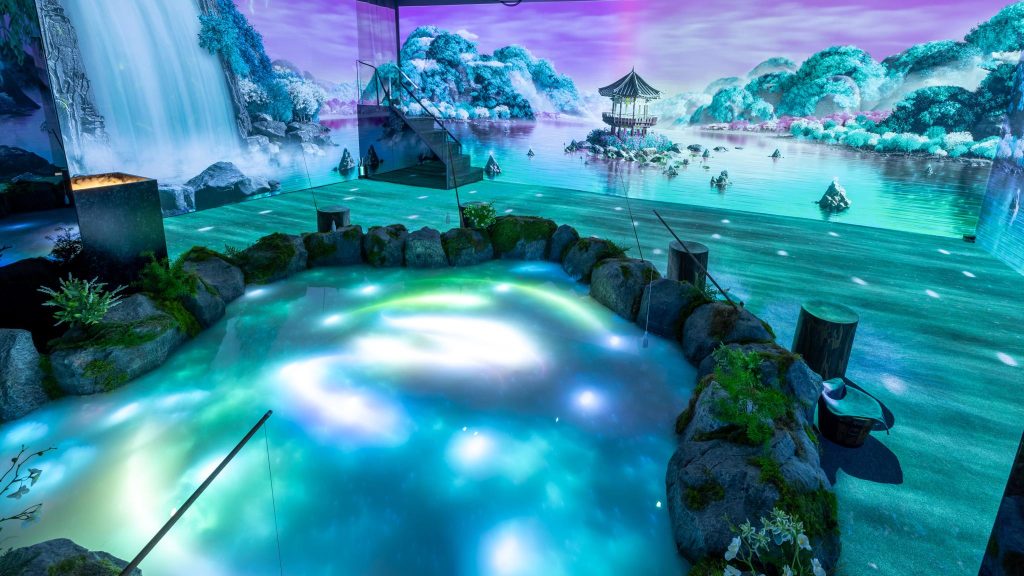
▲ Saerodowon Pop-up & Dining. Image source: iF Design official website
These cases show that future content production is no longer just about shooting a “beautiful image,” but about constructing a visual world that can be felt. The role of AI and digital technology is not only to improve production efficiency, but also to help brands create content scenes with greater imagination and emotional density.
At the same time, new filming tools are also changing the visual language of brand content.
In the past, brand shoots typically relied on professional cameras, standard lenses and mature imaging workflows. The higher the image quality and the more precise the control, the closer it was to the traditional definition of “professional.” But in the new content environment, truly recognizable visual language may instead come from certain limitations: special lenses, vehicle-mounted cameras, drone perspectives, low-resolution imagery, or even devices that were not originally created for filming.
The perspectives, distortions, movements and image textures inherent to these tools directly shape the way content tells a story. In other words, the medium is not merely a tool for recording a story. It can become part of the story’s language itself.
Hyundai’s short film Night Fishing is a typical example. This thriller short does not follow the conventional logic of advertising film production, nor does it position the car as the product hero to be displayed. Instead, it was shot entirely with the onboard cameras of the IONIQ 5. The vehicle-mounted cameras were originally part of the car’s sensing system, but in this project, they became the source of the film’s cinematic language.
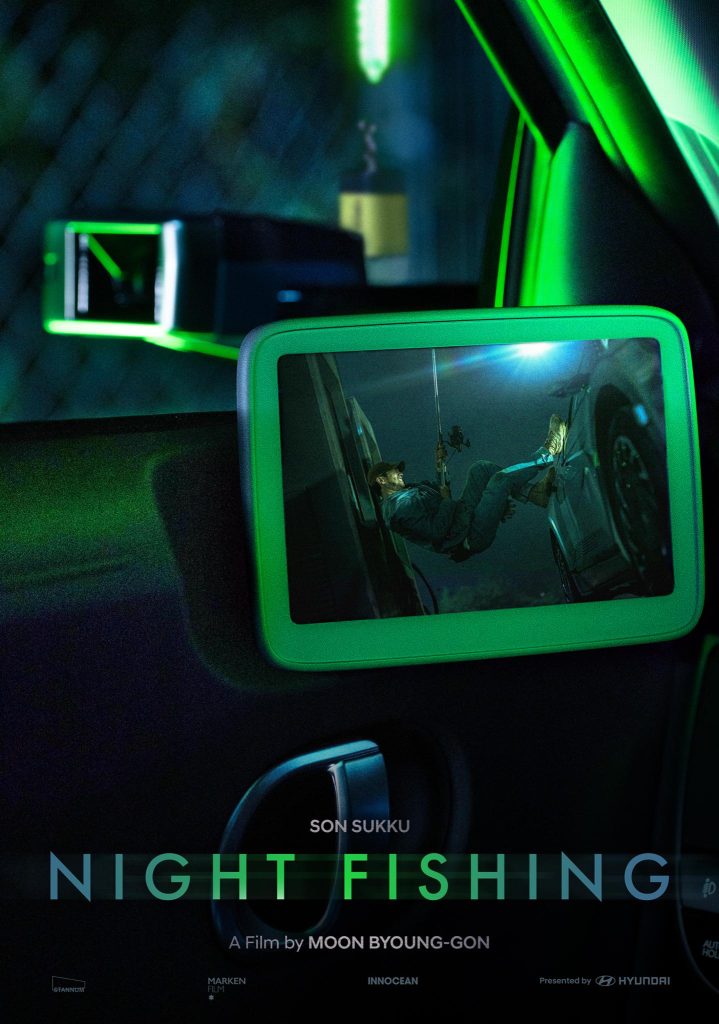
▲ NIGHT FISHING. Short film by IONIQ, released in cinemas. Image source: iF Design official website
This restrictive filming method created a distinctive visual effect. The angles, fields of view and perceptual qualities of the onboard cameras did not merely capture the story; they shaped the tension and narrative style of the entire film. The brand did not simply use technology. It turned technology into a new aesthetic starting point.
This is what makes Night Fishing especially worth referencing: the product is no longer merely an object of exposure within content. It can become the medium of content creation itself. When a brand can extract a distinctive visual language from its own technology, product structure or use scenario, it is no longer just a content producer. It is creating an expressive language that belongs only to itself.
📒 Insight: Leaving a “Human Fingerprint”
From AI Surrealism to filming through non-traditional media, content production is shifting from the pursuit of “refined mediocrity” toward a clearer “human fingerprint.”
Here, the “human fingerprint” does not only refer to traces of craft or imperfect details. It refers to the judgment a brand leaves behind in the creative process. It may be an imagination that deliberately deviates from reality, or a filming perspective that does not conform to traditional professional standards but is highly recognizable. It may come from AI hallucination, or from the visual gap created by the limitations of a particular device.
In an age where AI can rapidly generate perfect images, the focus of content production is no longer to approach reality infinitely, but to create feelings that cannot be averaged out. Truly memorable content is often not the smoothest, most complete or closest to the standard answer. It is the expression that carries clear choices, emotional intensity and creative deviation.
For brands, future content production and visual creation do not necessarily need to be more realistic or more perfect. They need to show stronger judgment. AI can provide efficiency, and technology can expand boundaries, but what ultimately determines whether content works is still how the brand chooses, how it deviates, how it preserves imperfection, and how it creates imagination beyond reality.
When algorithms make “good-looking” increasingly easy, what becomes truly scarce are the things that cannot be replicated: distinctive media choices, unexpected visual gaps, real emotional intensity and a creative perspective that belongs to the brand itself.
5. Conclusion: Judgment Is the New Moat for Brands
Looking back at the entire iF Design Trend Report 2026, one keyword appears repeatedly: judgment.
In the age of AI, execution capability is becoming rapidly democratized. The barriers to generating visuals, building websites, producing content and optimizing communication are continuously decreasing.
But the ability to judge what is worth creating, what is worth preserving and what is worth rejecting remains uniquely human.
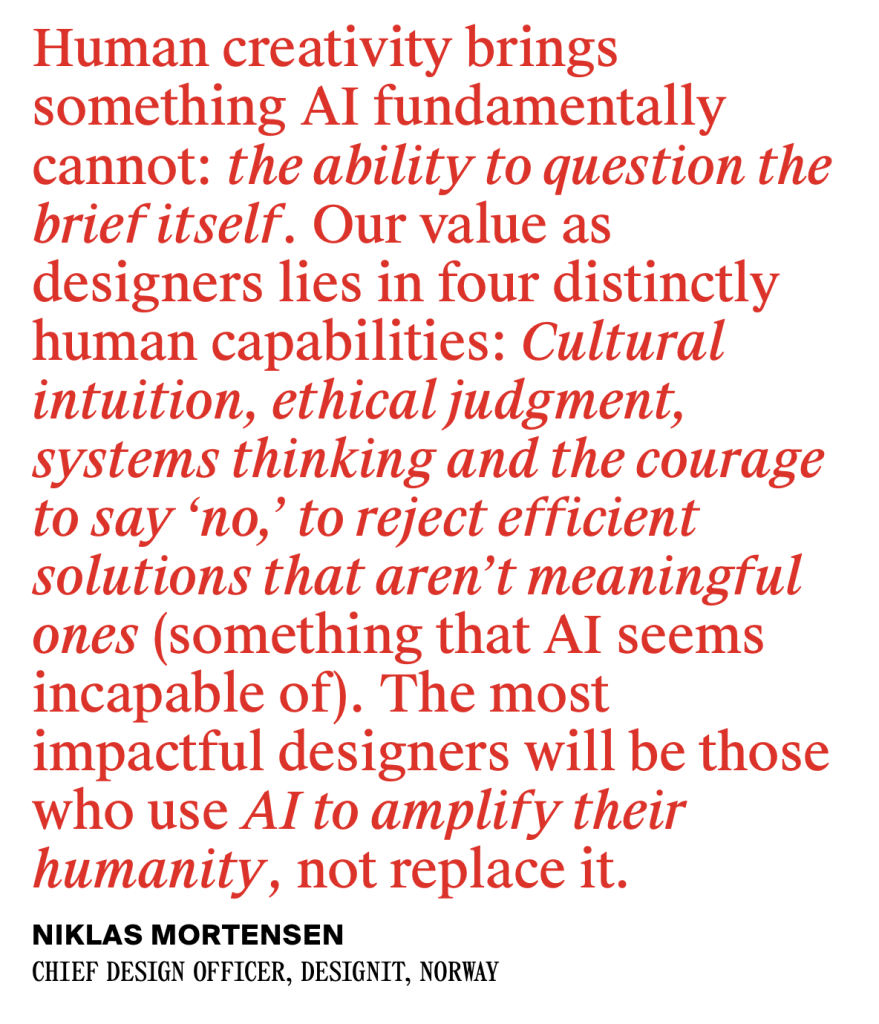
▲ Image source: iF Design Trend Report 2026
Therefore, the most important asset for future brands may no longer be a specific design style, but a clear and firm system of value judgment.
When algorithms continue to push the world toward the average, what brands truly need to protect are the things that cannot be averaged out — distinctive cultural perspectives, real human experiences and their own creative fingerprints.
This may be the most important brand question of 2026.
Let’s make your next rebrand more than just a new look. Contact us to make it a turning point.