




Shopify is doing something surprisingly un-Shopify: no longer just rolling out incremental features. The Winter ’26 Edition (Renaissance) signals a fundamental shift:
Shopify is moving from a “tool-based e-commerce platform” to an AI-driven commerce operating system (Commerce OS).
For global brands, this isn’t just a functionality upgrade—it’s a strategic pivot that could redefine how you grow, manage, and scale your Shopify business.
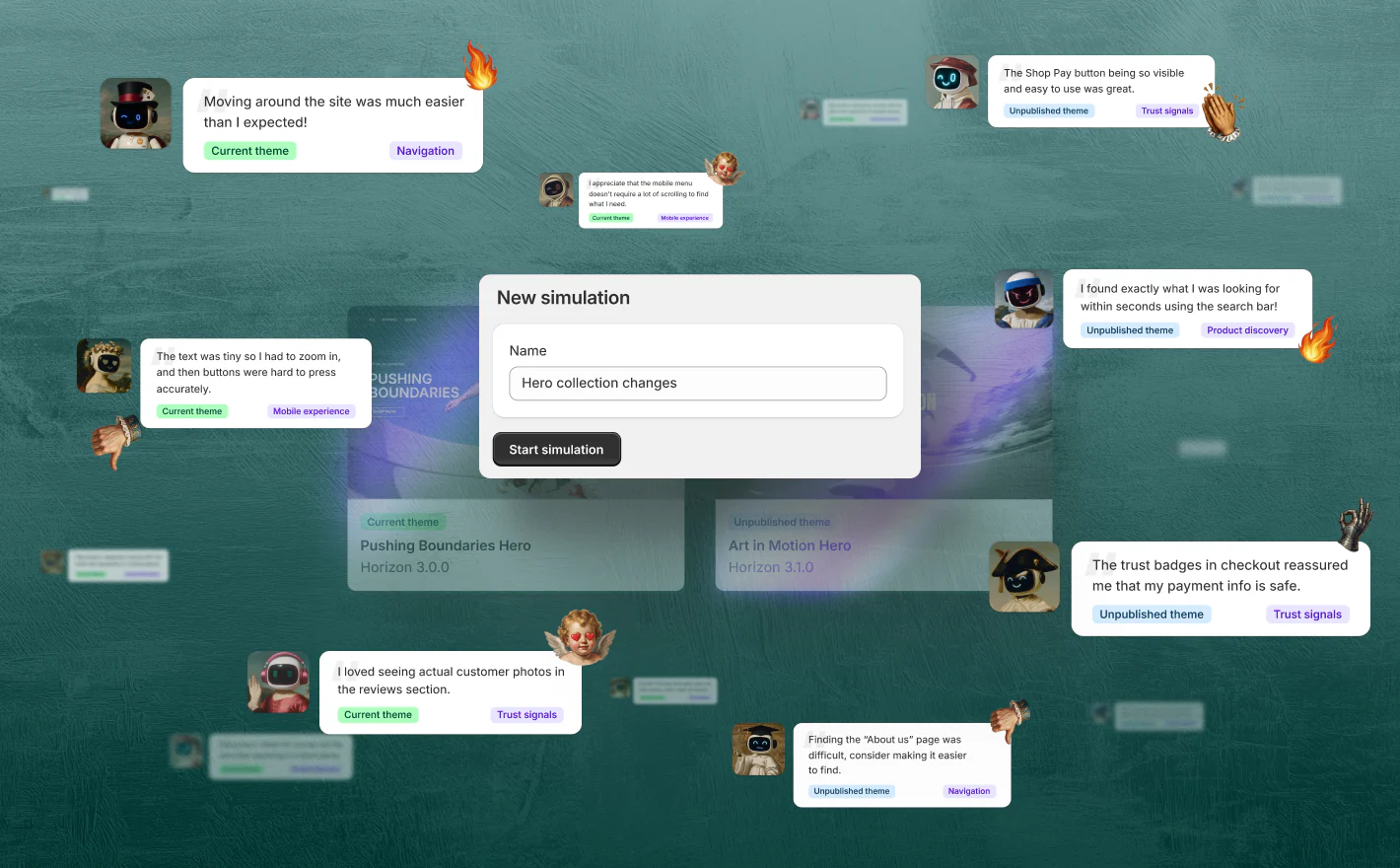
1. From Selling to Smart Business Operations
▲ Source: Shopify
For the past decade, Shopify’s role was clear:
- Provide a stable, scalable online store
- Solve payments, site-building, and plugin integration
- Leave growth, marketing, logistics, and operational strategy to merchants
In 2026, that logic is evolving. Tools alone aren’t enough—brands need decision intelligence and operational coordination. Today’s e-commerce brands face:
- Multi-market, multi-language, multi-currency complexity
- AI-driven competition in advertising efficiency
- Abundant data—but limited capacity to turn it into actionable insights
Shopify’s Winter update is designed to help brands run smarter, more complex operations without getting bogged down in manual management.
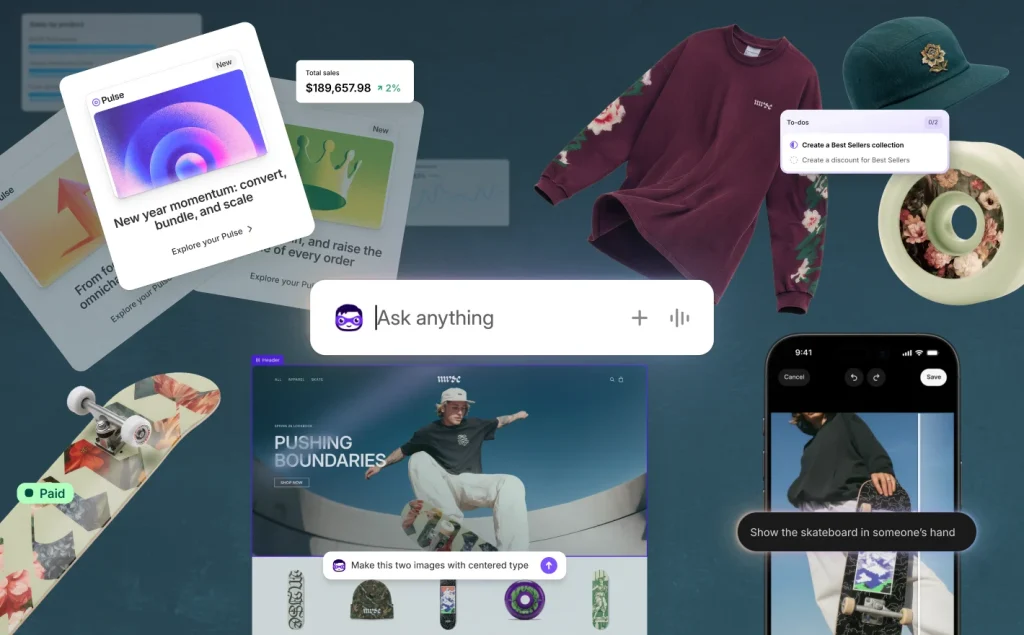
2. AI Is No Longer a Plugin. It’s Your Default Collaborator
▲ Source: Shopify
Previously, Shopify AI was:
- A plugin
- A customer service assistant
- A content generator
Now, AI is embedded into the core workflow:
- Understanding product structures, markets, and historical performance
- Providing actionable recommendations: which SKUs to boost, which markets to optimize, and how to adjust budgets
For example, if a SKU in Japan sees declining CTR, Shopify AI can suggest a small price adjustment or reallocation of ad spend directly in the dashboard—not just leave a static report for you to interpret.
The principle is clear: data is no longer just a report—it becomes actionable instruction.
Shopify AI shortens the gap between discovering an issue and executing a solution, allowing teams to validate decisions faster and reduce trial-and-error costs.
3. Shopify Is Building a Unified Platform
A key signal from this update is that Shopify is blurring traditional platform boundaries:
- Ads are no longer siloed in ad platforms
- CRM is no longer fully third-party
- Automation is integrated, reducing reliance on tools like Zapier
Shopify wants to become the default operational hub—not by replacing every tool, but by reducing friction and centralizing decision-making. For brands, this means:
- Fewer tool switches
- Fewer data silos
- Faster, more efficient execution
But it also deepens platform dependency—brands are increasingly reliant on Shopify as their operational backbone.
4. Shop APP: Long-Term Consumer Infrastructure

▲ Source: Shopify
While the backend evolves into a commerce OS, Shop APP is Shopify’s strategic play on the consumer side. Unlike Amazon-style short-term traffic tools, Shop APP is designed to create a neutral, cross-brand consumer layer:
- Unified identity, payments, orders, and trust
- Continuous behavioral data feed for AI systems
- Foundation for cross-brand recommendations, repeat purchases, and subscription models
Shop APP is less about immediate traffic and more about building a long-term growth foundation. Its evolution will likely include:
- Smarter personalized recommendations
- Smoother cross-store repeat purchases
- Deeper membership and payment integration
For global brands, Shop APP is a “future-proof reserve layer”—it doesn’t drive instant revenue but sets the stage for sustained engagement, repeat sales, and customer loyalty.
5. What This Means for Global E-commerce Brands

▲ Source: Shopify
Impact on Teams
AI integration shifts the core value of operations teams:
- From reading reports to interpreting business logic
- From blindly following data to validating AI suggestions
- From manual configuration to strategically leveraging system intelligence
Even the most advanced AI can’t make decisions for your team, but it amplifies good judgment and accelerates error correction.
Impact on Growth Strategy
Shopify signals that mass ad spend and blunt growth hacks are over. Future independent store growth will look like a precision relay race:
- Continuous optimization
- Small, iterative improvements
- Leveraging system intelligence for maximum efficiency
Short-term traffic spikes are less valuable than long-term, sustainable profitability.
Shop APP Implications
Long-term, Shop APP helps brands escape single-platform dependency and reclaim customer relationships. Short-term, it’s not yet a primary growth engine, especially for non-US merchants.
Brands should approach it as:
- Technically integrating the system
- Strategically observing its evolution
- Using it as a foundation layer, not a channel to “bet everything on.”
The real risk isn’t whether you adopt Shop APP—it’s whether your brand is ready to be surfaced when the system begins amplifying differentiation.
Partner with Naturality to Future-Proof Your Shopify Growth
Naturality Digital is Shopify’s official partner.
We specialize in Shopify store setup, operations, and performance marketing for e-commerce brands. If you’re planning your independent store growth strategy, let’s connect to capture early advantages from Shopify Winter ’26 Edition and drive long-term global success.