



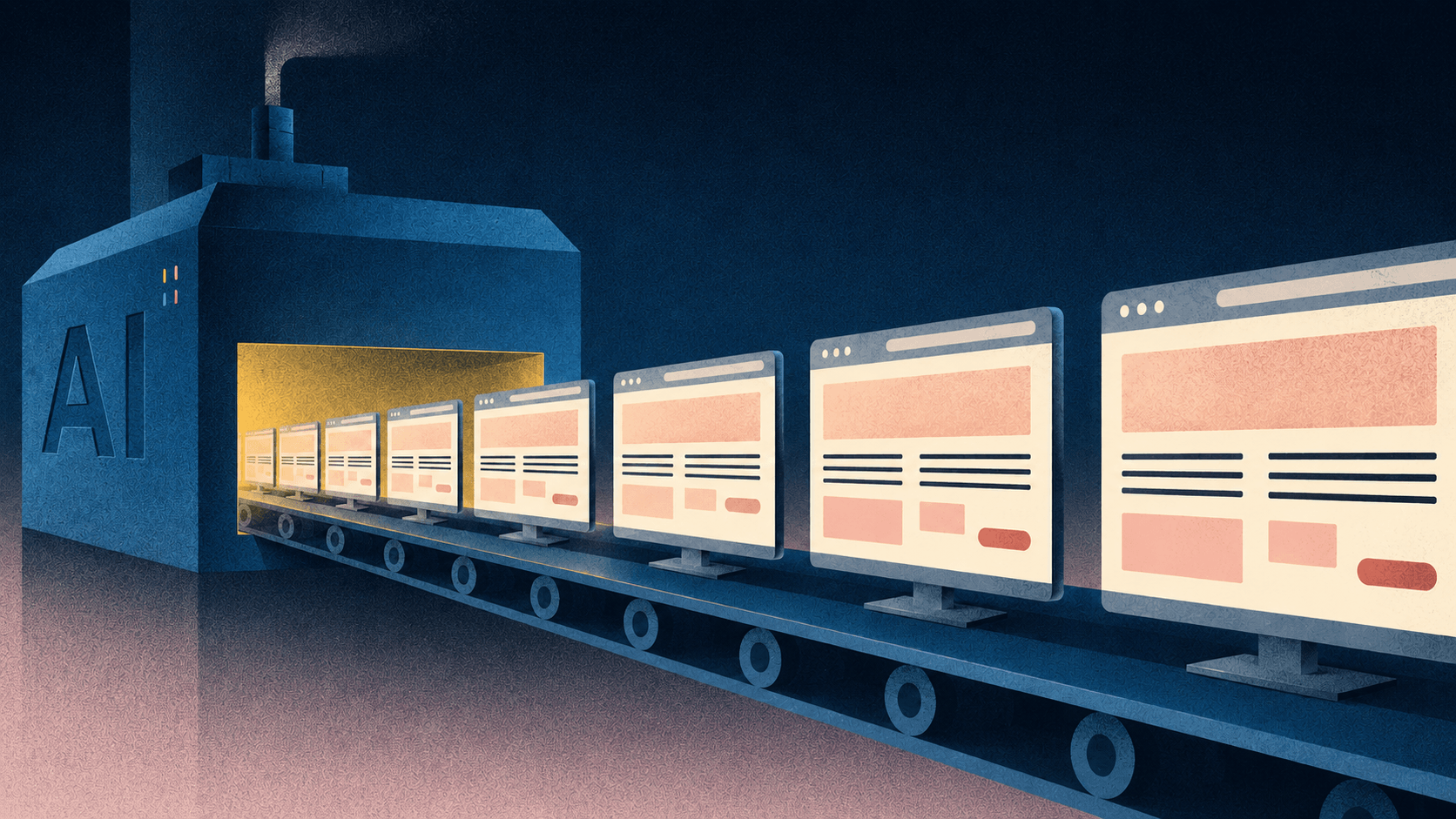
A counterintuitive scene
Over the past year, we’ve seen this scene play out again and again: a hardware brand founder opens their laptop, spends ten minutes with an AI tool, and walks away with a logo, some product shots, and a homepage that looks “pretty professional.” The cost is near zero. The output isn’t ugly. They breathe a sigh of relief — branding, it turns out, doesn’t have to be a money pit.
Three months later, the confusion sets in. Ad click-through rates are flat. Visitors bounce off the site in seconds. A comment reads: “Looks just like that other brand.” The design got cheaper. The brand didn’t get remembered.
This isn’t an isolated case. In 2026, AI design tools have dropped the barrier to entry through the floor — while quietly pushing a more unsettling question to the surface: when everyone can produce decent visuals, what makes a brand stand out at all?
Design is being commoditized — but that’s only the beginning of the problem
AI-assisted design is nothing new. From Adobe Firefly to Canva’s smart features to an ever-growing roster of one-click brand asset generators, small and mid-sized businesses now have the ability to “make something” without relying on an agency. Adobe’s 2024 AI Creative Frontier study found that roughly 90% of creators are already using AI to boost productivity — and brands handling their own visuals is clearly on the rise.
This is, in many ways, a good thing. It lets lean teams turn ideas into something showable, fast — shortening the path from concept to market. We’re not here to dismiss that. For early-stage exploration, draft assets, and localization adaptations, AI is a capable assistant.
But there’s a gap between “can make it” and “should be remembered” — and that gap is filled with commercial logic. AI excels at recombining known styles into plausible answers. What it doesn’t do is answer the more fundamental question: what is your brand actually going to own in the consumer’s mind?
The hidden cost of cheap design: homogeneity is accelerating
When tools converge, aesthetics converge. That’s one of the most important warning signs for brands in 2026.
Superside’s latest brand design trends report puts it plainly: the democratization of tools does not equal the democratization of creative quality. In other words, when everyone has access to the same AI, the result is a sea of brands with near-identical faces — clean geometric type, gentle gradients, safe white space — virtually indistinguishable when placed side by side.
For consumer tech and smart hardware brands, this risk is particularly acute. These products tend to be feature-dense and spec-similar to begin with. If the visuals also drift toward “safe and correct” templates, there’s no reason for anyone to pause — on a shelf, in a feed, or on a crowdfunding page. Design got cheaper. Differentiation got flattened.
Here’s a number worth remembering: Superside’s research shows that 88% of consumers consider authenticity a crucial factor when deciding which brands to support. When AI floods the landscape with “perfect and correct” visuals, what users actually respond to is the kind of expression that can’t be batch-produced — work that carries judgment, perspective, and a point of view.
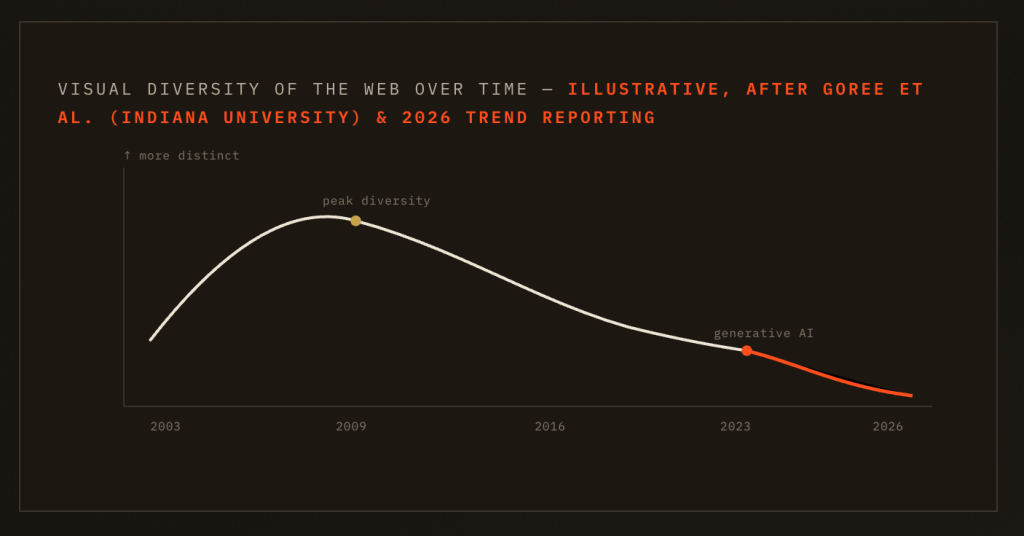
▲ Source: Indiana University (Goree et al.) and 2026 trend reporting, visualization by BuonaLabs, June 2026
2026’s counterintuitive signal: professional judgment is gaining value
Here’s the interesting part: the more AI spreads, the scarcer — and more valuable — strategic design judgment becomes.
We’ve noticed a shift in the questions clients bring us. It used to be “can you build us a nice-looking website?” Now it’s more often “why don’t users understand what we’re selling after they land on our page?” or “why aren’t our ad creatives delivering results?” AI can’t answer these questions, because it has no problem awareness — it doesn’t know who your users are, which market you’re competing in, or what emotion should live behind your tagline.
That’s where professional judgment lives. It doesn’t answer “can we make it?” — it answers “what should we make, why, and for whom?” In brand strategy, that means defining positioning and differentiation before deciding what the visuals should say. In web design, it means prioritizing information hierarchy and conversion paths over decoration. In content production, it means finding the emotional entry point through which users will perceive the product — before arranging the scene or narrative.
The stronger the technology, the more you need someone standing in front of it, making choices. Translating complex products into value users can understand. Turning technical advantages into credible, memorable expression. AI can’t do that. But the market has always been willing to pay for it.
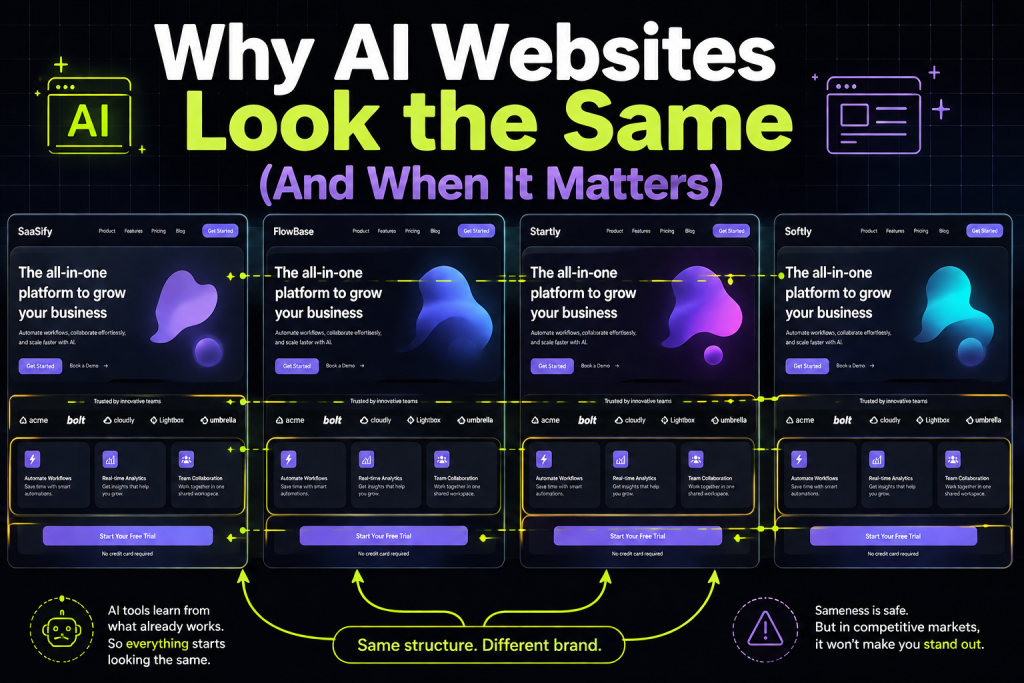
▲ Image Source: Payan Design Studio, 2026
The questions brands should actually be asking
If we follow this thread, the question for brand owners in 2026 isn’t “can AI do my design for me?” — it’s these more grounded ones:
Can a user understand what I’m selling in three seconds? The first second of visual perception is about recognition, not appreciation. A lot of AI-generated assets look good, but the information hierarchy is a mess — one glance and the user has no idea who you are or why they should trust you.
Is there a memorable gap between my visuals and my competitors’? Differentiation doesn’t have to come from disruption. It often lives in a carefully considered detail: a more honest visual tone, a typeface that actually fits the category, a layout that dares to go against category convention.
When content enters a different market, does the visual still hold up? This is especially critical for brands going global. A visual system validated in one market can land with the wrong tone or cultural connotation in another. Translation won’t fix it — it requires judgment about how users in the target market actually perceive things.
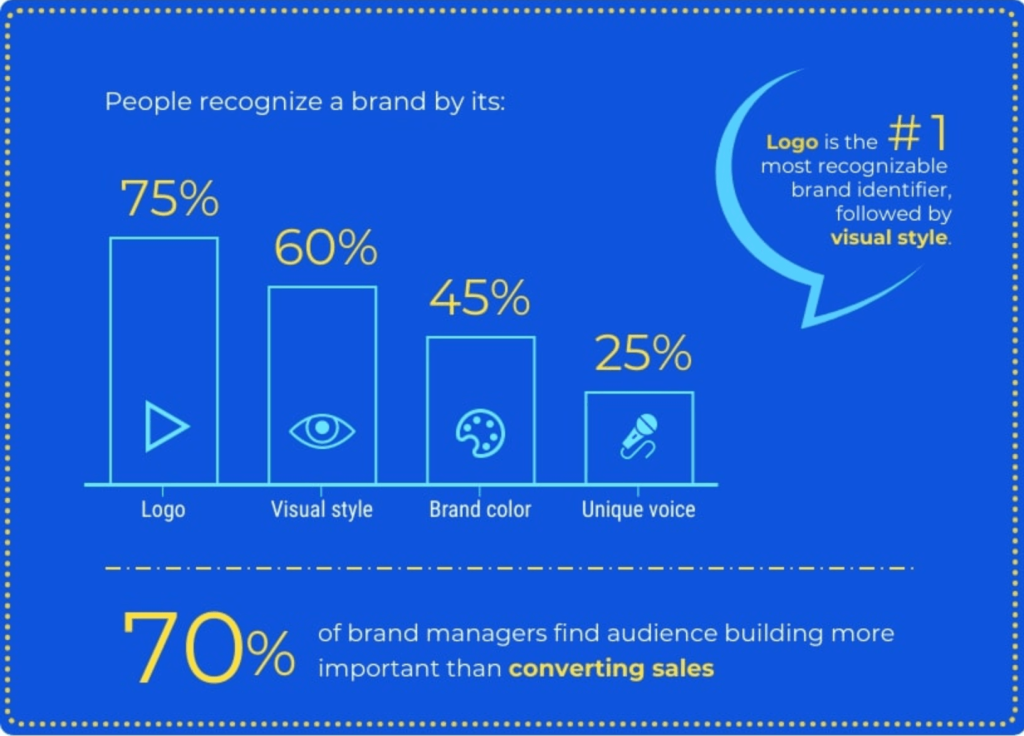
▲ Source: Renderforest Branding Statistics Infographic
What’s cheap is the output. What’s expensive is the judgment.
Let’s return to that founder we started with. What they saved was the production cost of design. But what actually determines whether a brand gets remembered are the judgments made before production even begins: who you’re trying to reach, what the real tension is between you and them, and which aspect of your product deserves to be seriously visualized.
AI has made doing cheaper — which, paradoxically, makes thinking more expensive. This isn’t contrarianism. It’s the single most important mindset shift for brand owners in 2026: tools can be shared, but judgment can’t be outsourced. In a world flooded with visual output, a brand system that carries strategy, attitude, and consistency becomes the scarcest asset of all.
That’s how we’ve always worked — not treating brand, web, production, and marketing as separate workstreams, but as touchpoints serving a single business goal. We figure out the why first, then translate it into visuals, content, and execution. Cheaper design is a good thing. The space it frees up should be reserved for the judgment that’s actually worth paying for.
Let’s make your next rebrand more than just a new look. Contact us to make it a turning point.